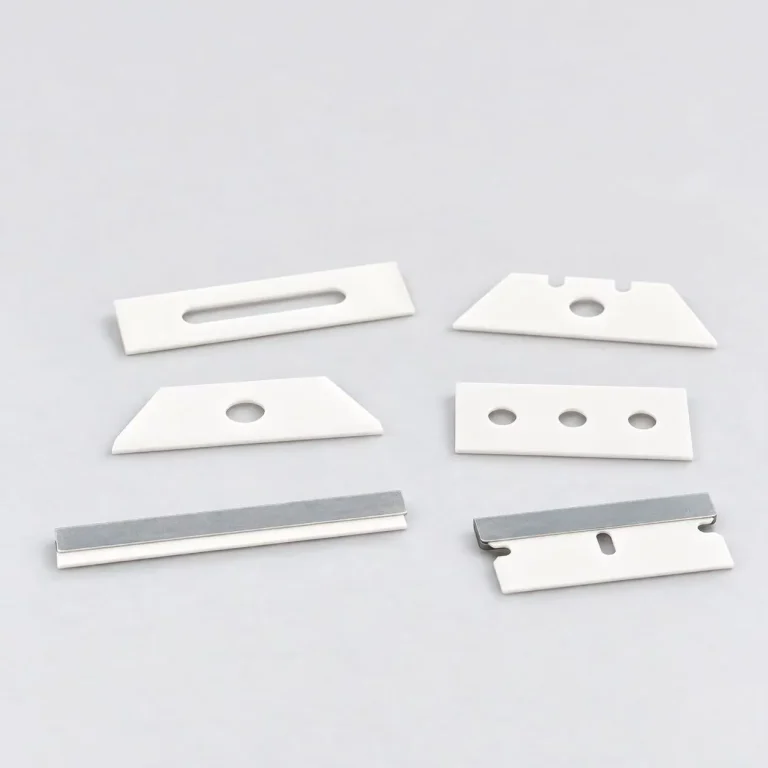
Precision Zirconia Ceramic Blade 01
Precision Zirconia Ceramic Blade
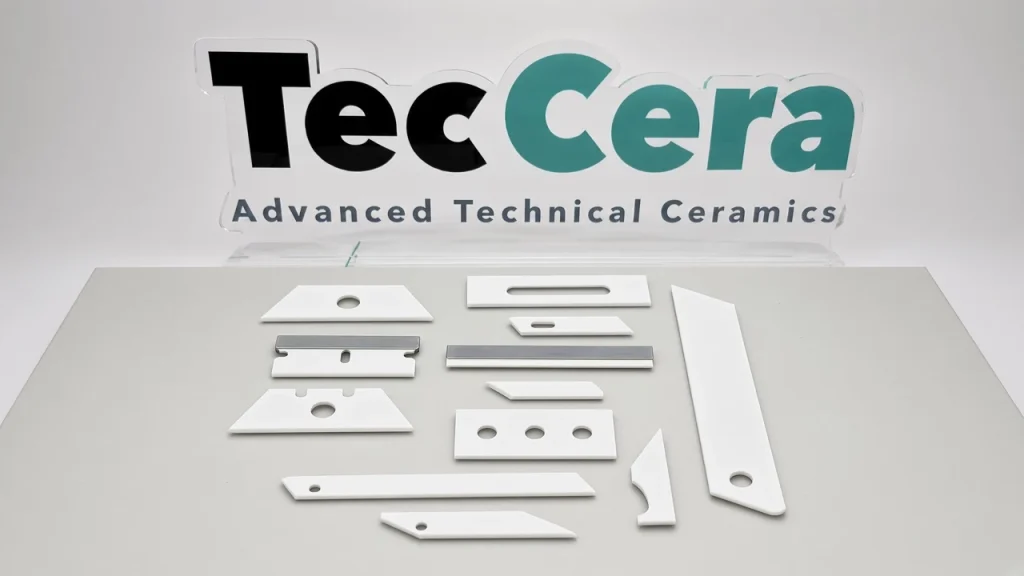
Zirconia Ceramic Blades
Custom zirconia ceramic blades with high wear resistance, corrosion resistance and long-lasting cutting edges for precision slitting, trimming and industrial cutting applications.
Precision Zirconia Ceramic Blade
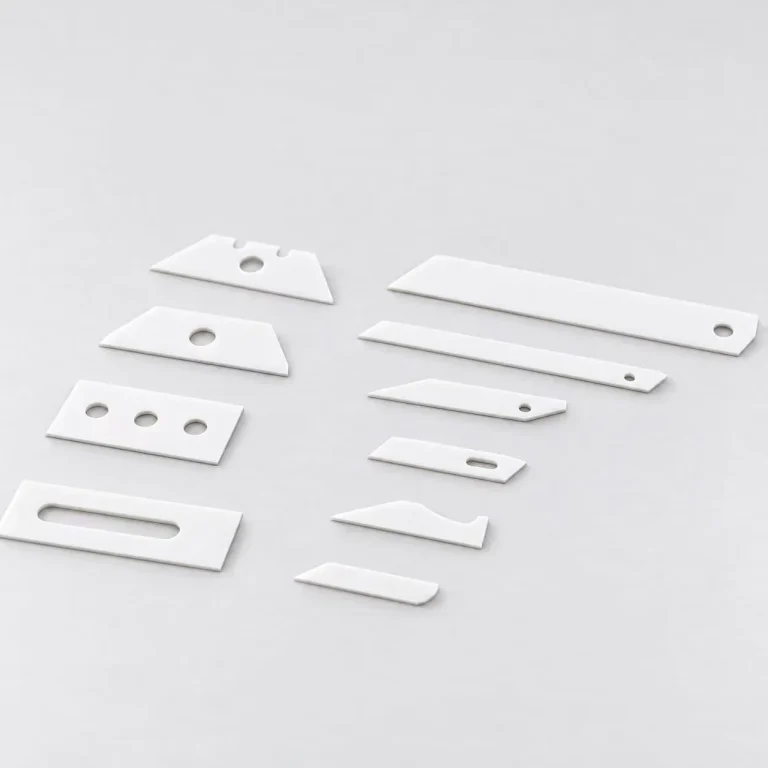
Precision Zirconia Ceramic Blade
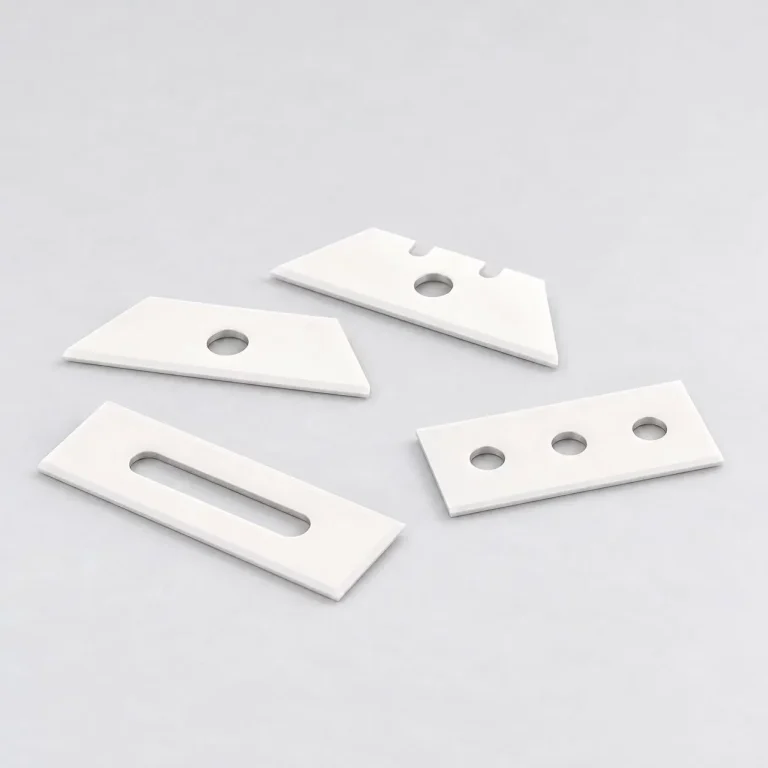
Precision Zirconia Ceramic Blade
| Parameter | Typical Value / Range | Unit |
|---|---|---|
| Material Composition | ZrO₂ stabilized with approximately 3 mol% Y₂O₃ | - |
| Color | Ivory / White | - |
| Density | 6.00–6.05 | g/cm³ |
| Flexural Strength at Room Temperature | 900–1,200 | MPa |
| Fracture Toughness | 6–10 | MPa·m¹ᐟ² |
| Vickers Hardness | 11.8–13.2 | GPa |
| Elastic Modulus | 190–210 | GPa |
| Thermal Expansion Coefficient | 9.5–11.0 | ×10⁻⁶/K |
| Thermal Conductivity at Room Temperature | 2.0–3.0 | W/(m·K) |
| Maximum Continuous Service Temperature | Up to 800, application-dependent | °C |
Precision Zirconia Ceramic Blades
TecCera supplies precision blades manufactured from stabilized zirconia ceramic through controlled forming, high-temperature sintering and precision grinding. Combining high hardness, wear resistance, chemical stability and relatively high fracture toughness among engineering ceramics, zirconia blades provide clean and consistent cutting in applications where conventional metal blades may wear, corrode or introduce metallic contamination.
Blade geometry, dimensions, mounting holes, cutting-edge angle and surface finish can be customized according to customer drawings and operating requirements.
Key Properties
Actual performance depends on the zirconia grade, blade geometry, cutting material, operating speed, load and installation conditions.
Product Types
Customization Options
Available colors and specifications depend on the selected zirconia composition and should be confirmed before ordering.
Typical Applications
Ceramic blades are best suited to controlled cutting conditions. They are generally not recommended for severe impact, lateral loading or cutting hard metallic objects.
Information Required for Quotation
Please provide:
TecCera will review the application and recommend an appropriate zirconia grade, blade geometry and manufacturing approach.
FAQ
Q1: Do zirconia ceramic blades last longer than steel blades?
They can provide substantially longer edge retention than conventional steel blades in suitable applications, particularly when cutting films, paper, fibers, polymers and other non-impact materials. However, service life cannot be stated as a fixed multiple because it depends on the material being cut, blade geometry, speed, load, alignment and operating conditions. Application testing is recommended.
Q2: Are zirconia ceramic blades easy to break?
Zirconia has higher fracture toughness than many other engineering ceramics, but it remains a brittle material compared with steel. Heavy impact, dropping, lateral prying, incorrect mounting and excessive load may cause chipping or fracture.
Q3: Can zirconia ceramic blades be resharpened?
Resharpening requires diamond grinding equipment and controlled processing. Whether regrinding is economical depends on blade size, geometry, wear condition and required edge quality. The blade should be evaluated before regrinding.
Q4: Can zirconia blades cut metal?
They are generally not recommended for cutting hard metals or applications involving heavy shock and lateral force. Please provide the cutting material and operating conditions so that suitability can be evaluated.