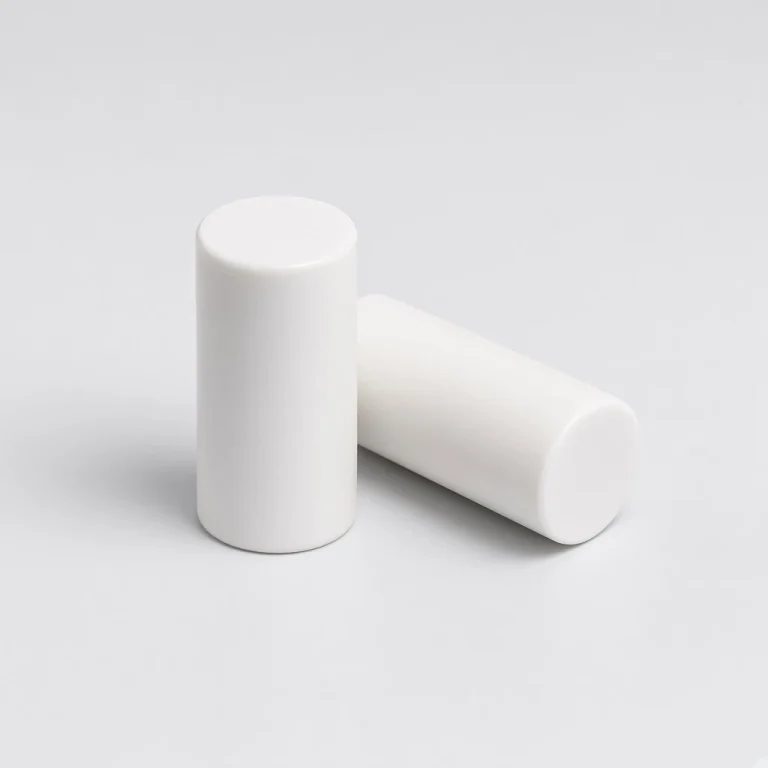
Short Alumina Ceramic Rods
Short English Description: High-purity solid alumina rods in custom diameters and lengths for insulating supports, positioning pins, and wear-resistant components.
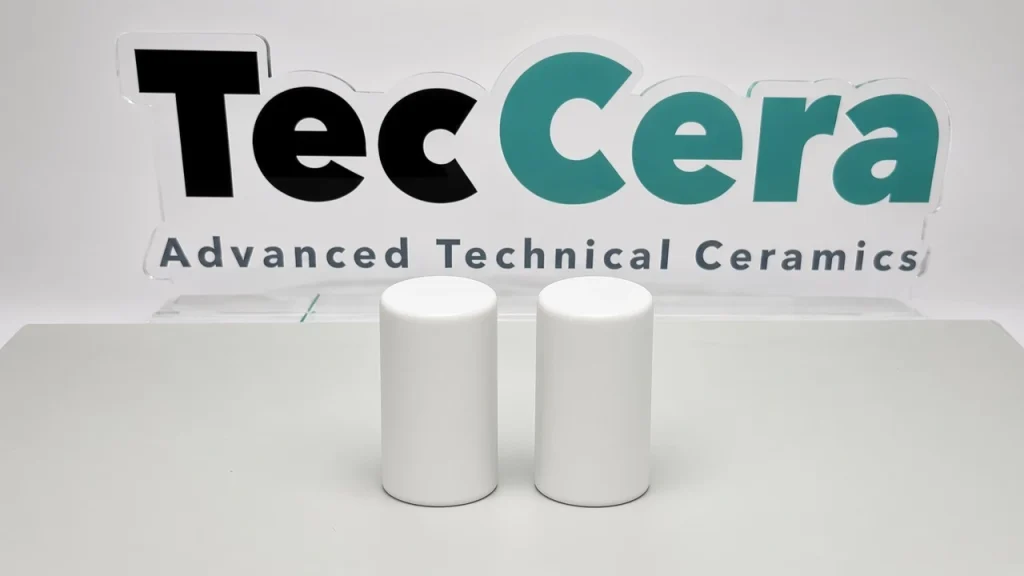
Alumina Ceramic Rods
Short English Description: High-purity solid alumina rods in custom diameters and lengths for insulating supports, positioning pins, and wear-resistant components.
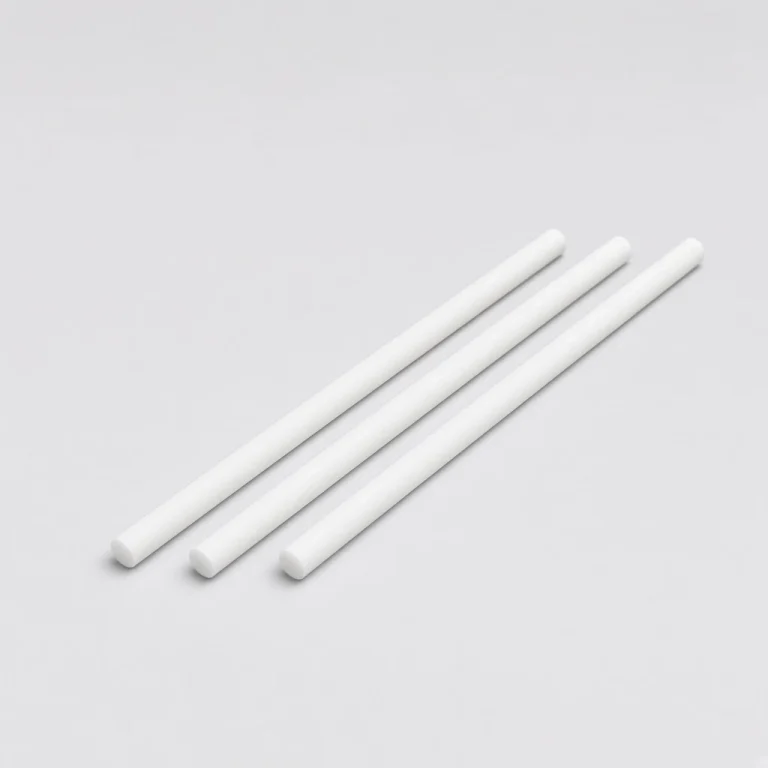
Slender alumina rods with precision-ground surfaces for guides, shafts, probes, and high-temperature electrical insulation.
Typical Specifications
|
Parameter |
Typical Specification |
|
Material |
High-purity alumina ceramic |
|
Alumina Content |
≥99% Al₂O₃ |
|
Product Form |
Solid round rod or custom profile |
|
Diameter |
3–50 mm, customizable |
|
Length |
Up to 2500 mm, subject to diameter, straightness, and shipping requirements |
|
Color |
White or ivory |
|
Surface Finish |
As-fired, precision ground, lapped, or polished |
|
Machining Options |
Cutting, grinding, drilling, slotting, chamfering, and polishing |
|
Dimensional Tolerance |
According to drawing and component geometry |
|
Straightness |
Specified according to diameter and length |
|
Maximum Service Temperature |
Confirmed according to material grade, mechanical load, atmosphere, and operating cycle |
TecCera supplies precision ceramic rods manufactured from high-purity alumina containing at least 99% Al₂O₃. These rods combine high hardness, electrical insulation, wear resistance, dimensional stability, and resistance to elevated temperatures.
They are suitable for use as insulating supports, wear-resistant shafts, plungers, guide components, positioning pins, and other precision parts used in electrical, mechanical, thermal-processing, and chemical equipment.
Standard and custom sizes are available. Components can be manufactured according to customer drawings or samples, with optional precision grinding, polishing, drilling, slotting, and chamfering.
Key Features
Typical Specifications
Product Advantages
High Wear Resistance
The high hardness of alumina provides excellent resistance to abrasion and surface wear. Precision-ground or polished rods can be used in sliding, guiding, positioning, and sealing applications where long-term dimensional stability is required.
Electrical Insulation
High-purity alumina provides excellent electrical insulation, high dielectric strength, and low dielectric loss. It is suitable for insulating supports, feedthrough components, electrode supports, and high-voltage equipment.
Elevated-Temperature Stability
Alumina retains useful mechanical and electrical properties at elevated temperatures and offers relatively low thermal expansion. Actual operating-temperature limits depend on the applied load, atmosphere, component geometry, and heating or cooling rate.
Chemical and Oxidation Resistance
Alumina is resistant to oxidation and many industrial chemicals. Compatibility should nevertheless be evaluated for concentrated acids, strong alkalis, molten salts, and high-temperature corrosive media.
Precision Customization
Ceramic rods can be manufactured to customer drawings with controlled diameter, length, straightness, surface roughness, and dimensional tolerances. Secondary machining is available for more complex features.
Typical Applications
Electrical and Electronic Equipment
High-Temperature Equipment
Mechanical Engineering
Chemical and Laboratory Equipment
Alumina Rods vs. Zirconia Rods
|
Property |
99% Alumina |
Zirconia |
|
Hardness |
Higher |
Lower |
|
Fracture Toughness |
Lower |
Higher |
|
Wear Resistance |
Excellent |
Excellent |
|
Electrical Insulation |
Excellent |
Excellent |
|
High-Temperature Stability |
Generally better |
Application-dependent |
|
Impact Resistance |
Moderate |
Better |
|
Material Cost |
Generally lower |
Generally higher |
Alumina is usually preferred for electrical insulation, high-temperature stability, hardness, and cost-sensitive wear applications. Zirconia is more suitable when fracture toughness and resistance to mechanical impact are the primary requirements.
Frequently Asked Questions
What is the maximum service temperature of a 99% alumina ceramic rod?
The allowable service temperature depends on the alumina grade, applied load, atmosphere, rod dimensions, and heating and cooling rates. Please provide your operating temperature and conditions so that the appropriate material grade can be evaluated.
Can alumina ceramic rods be custom machined?
Yes. We support custom diameters, lengths, profiles, surface finishes, and tolerances. Available machining operations include precision grinding, cutting, drilling, slotting, chamfering, lapping, and polishing.
For long or slender rods, achievable straightness and dimensional tolerances must be evaluated according to the diameter-to-length ratio.
Can holes be added to an alumina ceramic rod?
Yes, depending on the dimensions and required geometry. However, a component with a continuous axial hole is normally classified as an alumina ceramic tube rather than a solid ceramic rod. Please provide a drawing for manufacturability review.
Is alumina suitable for rapid temperature changes?
Alumina provides good high-temperature stability but has limited resistance to severe thermal shock compared with some specialized ceramic materials. Rapid heating and cooling should be avoided unless the component has been specifically designed and tested for thermal cycling.
What information is required for a quotation?
Please provide the following:
Send us your drawing or application requirements for material evaluation, manufacturability review, and quotation.