Aluminum Nitride Ceramics
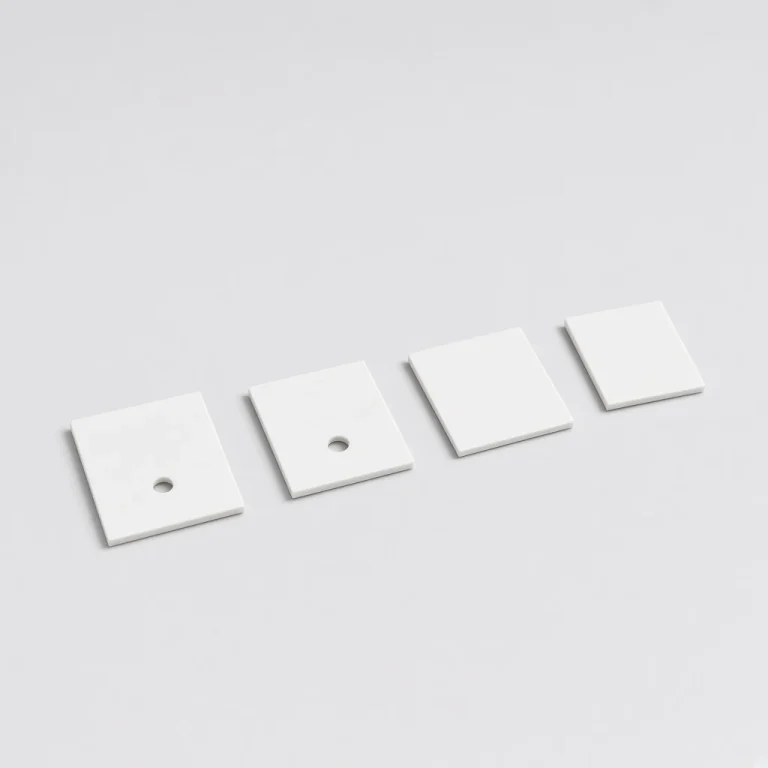
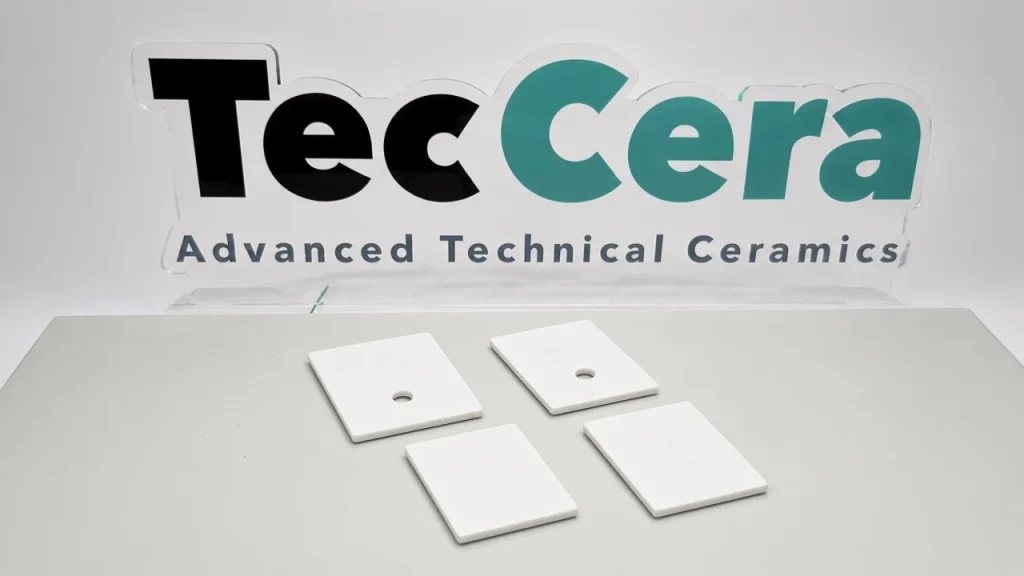
Aluminum Nitride Ceramic Substrate
Component Types
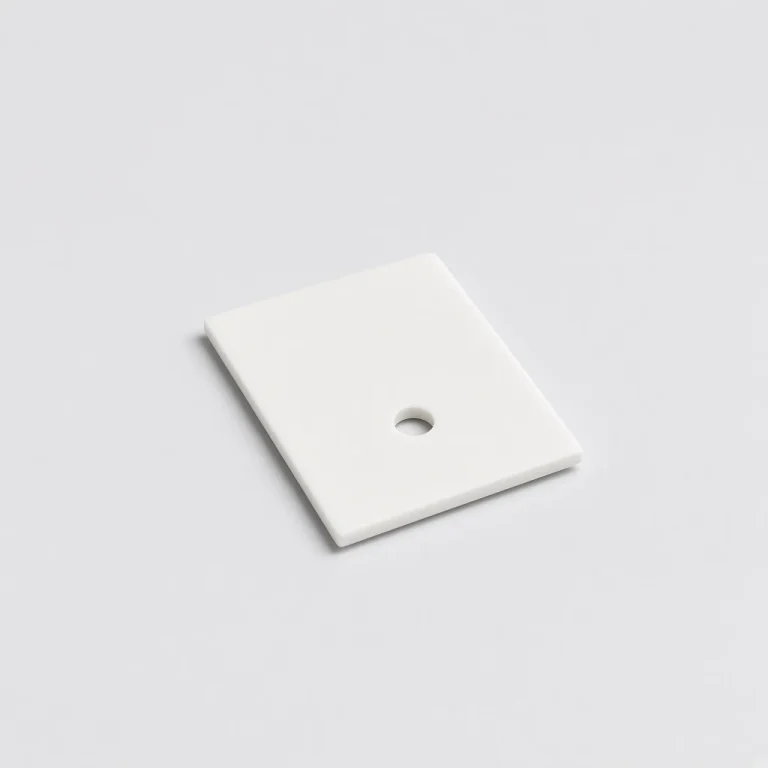
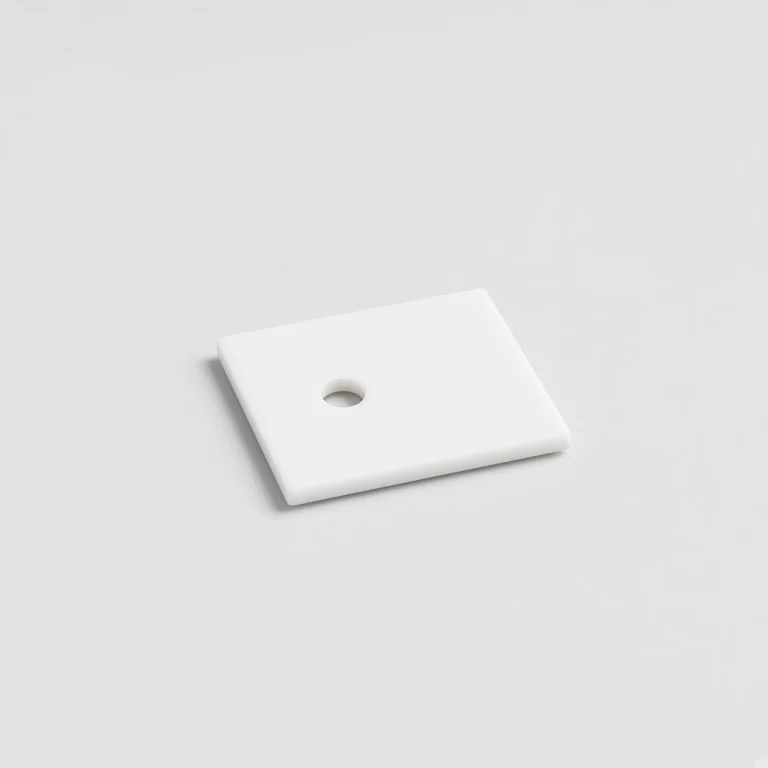
Detailed Product Information
Typical Technical Properties
|
No. |
Parameter |
Typical Value |
|
1 |
AlN purity |
≥99.5%; other grades available |
|
2 |
Oxygen content |
≤1.0% |
|
3 |
Thermal conductivity |
170–200 W/(m·K) |
|
4 |
Coefficient of thermal expansion |
Approximately 4.5 × 10⁻⁶/K at 20–300°C |
|
5 |
Volume resistivity |
≥10¹³ Ω·cm |
|
6 |
Dielectric constant at 1 MHz |
8.5–9.0 |
|
7 |
Flexural strength |
≥300 MPa |
|
8 |
Surface roughness |
Ra ≤0.3 μm for standard substrate finish |
The values above are typical reference data and may vary with material grade, thickness, manufacturing process and test method. Please contact us for grade-specific specifications.
Aluminum Nitride Ceramic Substrate
Aluminum nitride (AlN) ceramic substrates combine high thermal conductivity with excellent electrical insulation, making them well suited for high-power electronics, semiconductor packaging, LED modules, and thermal-management applications.
Compared with conventional alumina substrates, AlN provides significantly better heat dissipation. Its relatively low coefficient of thermal expansion also helps reduce thermal stress in assemblies containing silicon, GaN, and other semiconductor materials. Standard and custom substrates are available with precision-machined holes, slots, contours, and surface finishes.
Key Features
- High thermal conductivity of 170–200 W/(m·K), depending on material grade
- Excellent electrical insulation and high volume resistivity
- Low coefficient of thermal expansion for reduced thermal stress
- Good flexural strength and dimensional stability
- High-temperature and thermal-shock resistance
- Suitable for precision machining and customized geometries
- Available with polished, lapped, or metallized surfaces
Typical Applications
- Power modules and transistor mounting substrates
- IGBT, MOSFET and EV power-electronics modules
- LED and semiconductor-laser heat-spreading substrates
- Semiconductor packaging and thermal-management components
- High-frequency and microwave electronic devices
- GaN-based power devices
- Ceramic heaters, heat sinks and insulating components
Customization Options
- Custom lengths, widths and thicknesses
- Precision-machined holes, slots, steps and contours
- Surface grinding, lapping and polishing
- Laser cutting and drilling
- Metallized surfaces and patterned conductive layers
- Prototype, small-batch and volume production
Frequently Asked Questions
Q1: How does AlN compare with alumina for heat dissipation?
Aluminum nitride typically provides thermal conductivity of 170–200 W/(m·K), compared with approximately 20–30 W/(m·K) for common alumina ceramics. It is therefore better suited for high-power electronic applications requiring efficient heat dissipation.
Q2: What is the maximum operating temperature of an AlN substrate?
The allowable operating temperature depends on the material grade, atmosphere, mechanical load and service duration. AlN can withstand high temperatures, but the recommended continuous operating temperature should be confirmed according to the specific application and working environment.
Q3: Is AlN a suitable alternative to beryllium oxide?
Yes. Aluminum nitride provides high thermal conductivity without the beryllium-related health hazards associated with BeO processing. Appropriate precautions should still be followed when machining any ceramic material.
Q4: Can AlN substrates be customized?
Yes. We supply aluminum nitride substrates in custom dimensions, thicknesses and shapes, including components with holes, slots, steps, contours and specified surface finishes. Send us your drawings and technical requirements for evaluation.
Contact TecCera for custom aluminum nitride ceramic substrates, technical evaluation, samples and quotation support.