Silicon Carbide Ceramics
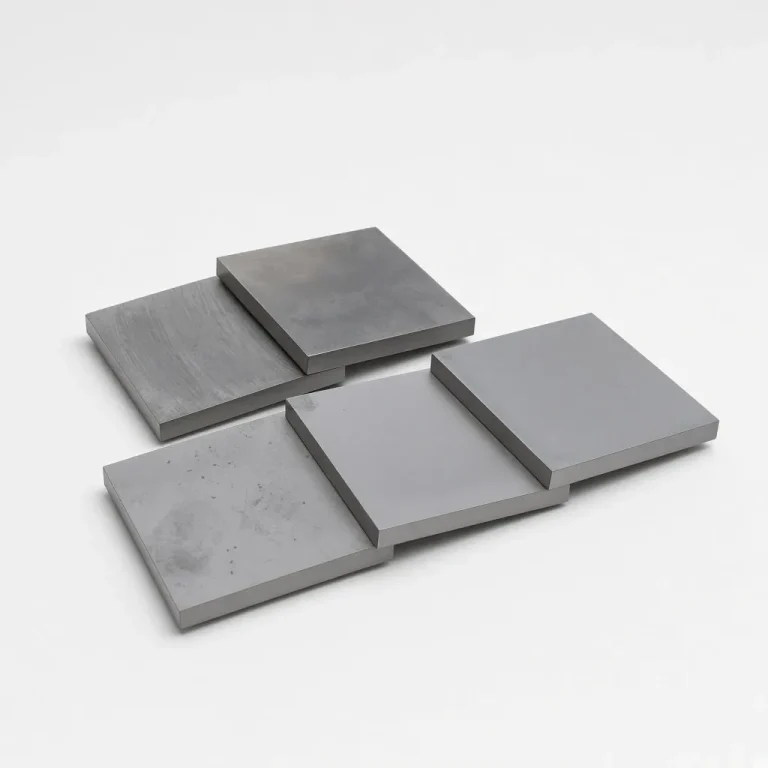
Silicon Carbide Ceramic Plate
Custom sintered silicon carbide ceramic plates offering high hardness, wear resistance, thermal stability, and corrosion resistance for demanding high-temperature and industrial applications.
Component Types
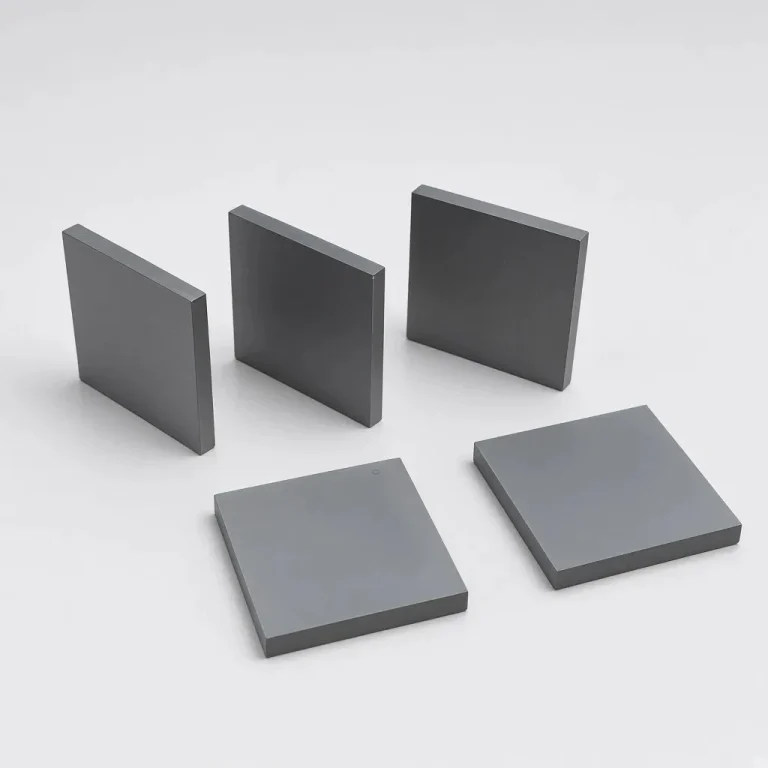
silicon carbide ceramic
Detailed Product Information
Typical Technical Properties
|
Parameter |
Typical Value |
|
Product type |
Sintered silicon carbide ceramic plate |
|
Material |
Pressureless sintered silicon carbide (SSiC) |
|
Color |
Black or dark grey |
|
Density |
Approximately 3.10–3.16 g/cm³ |
|
Apparent water absorption |
Approximately 0% |
|
Vickers hardness |
Approximately 22–25 GPa |
|
Flexural strength |
Approximately 380–550 MPa |
|
Compressive strength |
Approximately 3,200–3,900 MPa |
|
Thermal conductivity |
Approximately 100–150 W/(m·K) |
|
Coefficient of thermal expansion |
Approximately 4.0–4.5 × 10⁻⁶/K |
|
Thermal-shock resistance |
Grade and test-method dependent |
|
Maximum service temperature |
Up to approximately 1,600°C, depending on atmosphere and load |
|
Available surface finishes |
As-sintered, ground, lapped, or polished |
Sintered Silicon Carbide Ceramic Plate
Sintered silicon carbide (SSiC) ceramic plates combine high hardness, mechanical strength, thermal conductivity, and resistance to wear and chemical attack. Their low density and low coefficient of thermal expansion provide excellent dimensional stability and thermal-shock performance under demanding operating conditions.
TecCera supplies standard and custom SSiC ceramic plates for mechanical seals, industrial pumps, wear-resistant systems, thermal-processing equipment, and other high-temperature or corrosive applications.
Key Features
- High hardness and excellent abrasion resistance
- High mechanical and compressive strength
- Good strength retention at elevated temperatures
- High thermal conductivity and low thermal expansion
- Excellent thermal-shock resistance
- Good resistance to a wide range of acids and corrosive media
- Low porosity and excellent dimensional stability
- Custom sizes, geometries, tolerances, and surface finishes
Typical Applications
- Wear-resistant plates, liners, and guide components
- Mechanical seals and pump components
- Chemical-processing equipment
- Heat-exchanger and thermal-management components
- Kiln furniture and high-temperature support plates
- Sandblasting and erosion-resistant components
- Semiconductor-processing components using appropriate high-purity grades
- Custom structural components for harsh industrial environments
Available Processing Services
- Custom moulding and forming
- Green machining before sintering
- Precision diamond cutting and grinding
- CNC machining of holes, slots, and contours
- Surface lapping and polishing
- Edge chamfering and dimensional inspection
Advantages of Sintered Silicon Carbide
Excellent Wear Resistance
SSiC has extremely high hardness and maintains good surface stability under abrasive and erosive conditions, helping extend the service life of wear-critical components.
High Mechanical Strength
Its dense microstructure provides high flexural and compressive strength. Actual performance depends on the material grade, component geometry, surface finish, and testing method.
Thermal Stability
The combination of high thermal conductivity and low thermal expansion helps reduce internal temperature gradients and thermal stress during rapid temperature changes.
High-Temperature Performance
SSiC retains useful mechanical properties at elevated temperatures. The allowable operating temperature must be evaluated according to atmosphere, load, component design, and exposure time.
Oxidation and Corrosion Resistance
A protective silica-rich layer may form on the surface in oxidizing environments, helping slow further oxidation. SSiC also offers good resistance to many acids and corrosive chemicals, although compatibility should be verified for the specific chemical concentration and operating temperature.
Frequently Asked Questions
Q1: What is the difference between SSiC and reaction-bonded SiC?
SSiC is produced without free silicon and generally provides better high-temperature stability and chemical resistance. Reaction-bonded SiC is often more economical and easier to manufacture in large or complex shapes but contains residual silicon.
Q2: Can sintered silicon carbide plates be machined?
Yes, but fully sintered SiC is extremely hard and normally requires diamond tools. Complex holes, slots, and contours are preferably formed or machined before final sintering whenever possible.
Q3: Is SSiC resistant to all acids and alkalis?
SSiC resists a wide range of corrosive media, but it is not universally inert under every condition. Chemical concentration, temperature, pressure, and exposure time must be evaluated before material selection.
Q4: Can you manufacture custom SSiC plates?
Yes. Custom dimensions, holes, slots, contours, tolerances, and surface finishes are available according to customer drawings and application requirements.
The properties listed above are typical reference values and may vary according to material grade, manufacturing process, component geometry, and test method. Contact TecCera for application-specific material selection and technical confirmation.