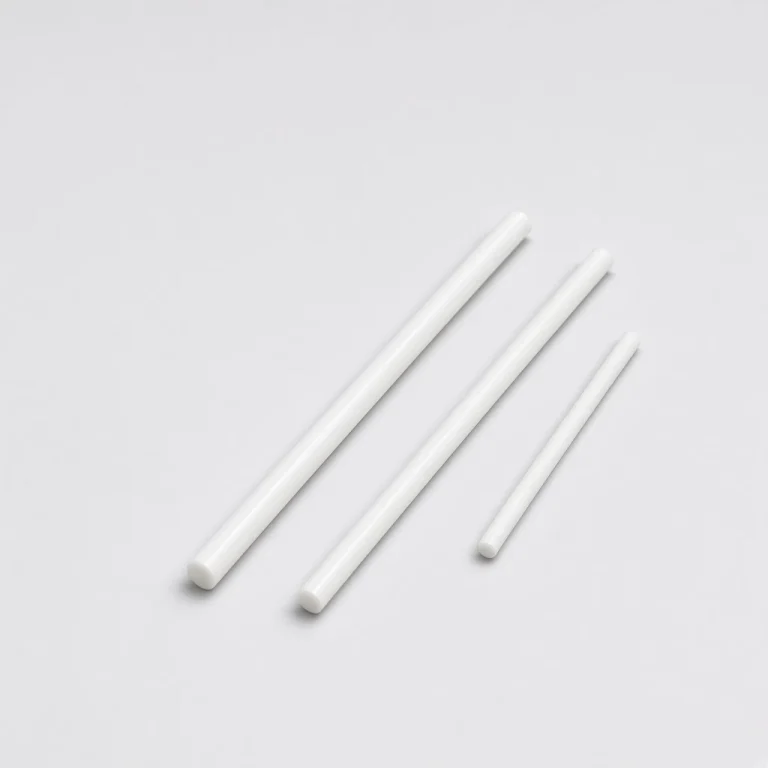
Small-Diameter Zirconia Ceramic Rods
Short English Description: Precision-ground Y-TZP zirconia rods for positioning pins, guides, probes, and other small precision components.
Zirconia Ceramic Rods
Short English Description: Precision-ground Y-TZP zirconia rods for positioning pins, guides, probes, and other small precision components.
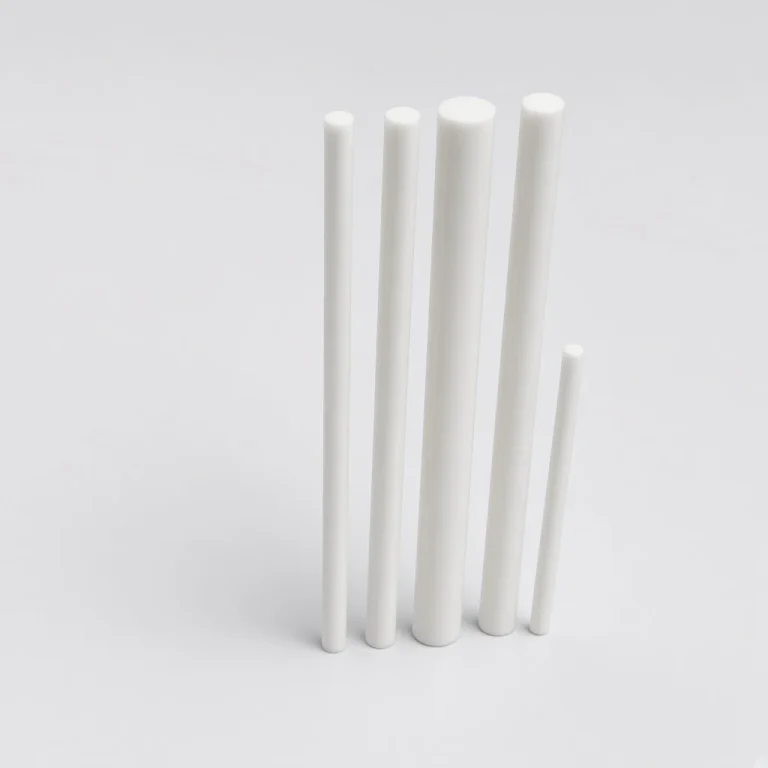
High-strength zirconia rods for wear-resistant shafts, plungers, valve components, and demanding mechanical applications.
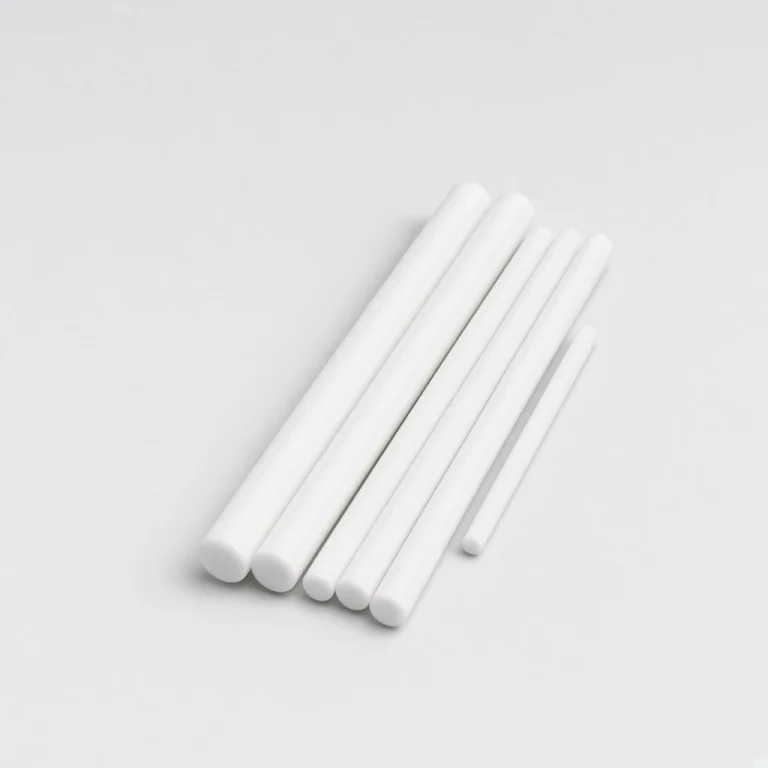
Custom diameters, lengths, tolerances, and polished surface finishes are available according to customer drawings.
Typical Specifications
|
Parameter |
Unit |
Typical Value for 3Y-TZP |
|
Material Composition |
— |
ZrO₂ stabilized with approximately 3 mol% Y₂O₃ |
|
Standard Color |
— |
White |
|
Density |
g/cm³ |
6.00–6.05 |
|
Flexural Strength |
MPa |
900–1200 |
|
Fracture Toughness |
MPa·m¹/² |
6–9 |
|
Vickers Hardness |
HV |
1200–1350 |
|
Elastic Modulus |
GPa |
190–210 |
|
Thermal Expansion Coefficient |
×10⁻⁶/K |
9.5–11.0 |
|
Thermal Conductivity |
W/(m·K) |
2.0–3.0 |
|
Recommended Long-Term Service Temperature |
°C |
Application-dependent; typically up to 800–1000 |
|
Available Diameter |
mm |
0.5–60, subject to confirmation |
|
Available Length |
mm |
Up to 1000, subject to diameter and straightness |
|
Standard Tolerance |
mm |
±0.01, depending on geometry |
|
Precision Tolerance |
mm |
Down to ±0.005 for suitable dimensions |
Values are typical material data rather than guaranteed specifications. Final properties and tolerances should be confirmed according to the selected zirconia grade, component geometry, and operating conditions.
Solid Zirconia Ceramic Rods (Y-TZP)
TecCera supplies solid zirconia ceramic rods manufactured from yttria-stabilized zirconia, typically 3 mol% Y₂O₃-stabilized tetragonal zirconia polycrystal (3Y-TZP).
Zirconia combines high flexural strength, fracture toughness, wear resistance, and a low coefficient of friction. Compared with alumina, it offers greater resistance to impact, bending, and crack propagation, making it suitable for demanding mechanical and fluid-control applications.
The rods can be manufactured by isostatic pressing, controlled sintering, and precision machining. Custom diameters, lengths, tolerances, profiles, and surface finishes are available according to customer drawings or samples.
Key Features
High Strength and Fracture Toughness
Typical 3Y-TZP zirconia provides flexural strength of approximately 900–1200 MPa and fracture toughness of approximately 6–9 MPa·m¹/². Its transformation-toughening mechanism helps resist crack propagation and brittle failure.
Excellent Wear Resistance
Zirconia combines high hardness with greater toughness than conventional alumina. Precision-ground or polished surfaces provide reliable performance in shafts, plungers, guides, valve components, and other sliding or wear-intensive applications.
Corrosion Resistance
Zirconia is resistant to many acids, alkalis, saline solutions, and industrial fluids. Chemical compatibility must nevertheless be confirmed for concentrated reagents, molten salts, molten metals, and high-temperature corrosive media.
Low Thermal Conductivity
With thermal conductivity typically around 2–3 W/(m·K), zirconia transfers heat more slowly than alumina and many metals. This makes it useful where thermal isolation is required.
Precision Machining
Custom machining options include centerless grinding, cylindrical grinding, drilling, slotting, chamfering, lapping, and polishing. Final tolerances depend on rod diameter, length, geometry, and surface-finish requirements.
Typical Applications
Precision Machinery
Fluid-Control Equipment
Electronics and Optical Equipment
Specialized Components
Medical or dental use requires an appropriate medical-grade material, controlled manufacturing, traceability, validation, and compliance with applicable regulatory requirements.
Frequently Asked Questions
1. How do zirconia ceramic rods compare with alumina ceramic rods?
Zirconia generally offers higher fracture toughness, flexural strength, and impact resistance. Alumina normally provides higher hardness, better high-temperature stability, and lower material cost.
Zirconia is preferred for components exposed to impact, bending, sliding contact, or crack-sensitive loading. Alumina is often more suitable for electrical insulation, elevated-temperature use, and cost-sensitive wear applications.
2. What sizes and tolerances are available?
Typical diameters range from 0.5 to 60 mm, with lengths up to 1000 mm. A standard dimensional tolerance of ±0.01 mm is available for many components, while tolerances down to ±0.005 mm may be achievable for suitable sizes and geometries.
Extra-long or slender rods require separate evaluation because achievable straightness, roundness, and transportation safety depend strongly on the diameter-to-length ratio.
3. Why are some zirconia rods white and others black?
White is the standard color of conventional Y-TZP zirconia. Black zirconia is produced using selected additives and controlled processing.
Black zirconia is available for applications requiring a dark appearance, reduced visible staining, or optical contrast. Its properties should not be assumed to be identical to white zirconia; mechanical, electrical, thermal, and optical performance must be confirmed using the relevant material datasheet.
4. Can zirconia rods be mirror polished?
Yes. Precision grinding, lapping, and mirror polishing are available. Achievable surface roughness depends on rod diameter, geometry, application, and inspection requirements.
Send us your drawing, required zirconia grade, dimensions, tolerances, surface finish, operating conditions, and quantity for technical review and quotation.